

Table of Contents
- What an iilumo Alternative Actually Needs to Deliver
- The Four Things That Decide Whether a Swap Is Worth It
- LED Bulbs for Projector Headlights: How They Compare to the Factory Bulb
- LED Headlight Bulb Compatibility: Fitment, Canbus and Vehicle Checks
- Projector Headlight Beam Pattern: What Good and Bad Output Looks Like
- HID Bulbs in Projector Headlights: Still Worth Considering in 2026?
- Legality, ADR Compliance and What Inspectors Check
- Total Cost of Ownership and What to Ignore in the Marketing
- Conclusion
- Frequently Asked Questions
Last Updated: October 5, 2026
What an iilumo Alternative Actually Needs to Deliver
If you're hunting for an iilumo alternative for projector headlights, the honest starting point is this: swapping the bulb is the easy part, and most disappointment comes from buying on brightness claims alone.
An iilumo alternative is any replacement bulb or projector assembly that does the same job as the original part, without the fitment, beam or legality problems of a poorly matched set.
Below, we break down how LED and HID options compare in projector housings, what to check before you buy, and where most buyers go wrong.
The Four Things That Decide Whether a Swap Is Worth It
Fitment comes first, and it's the one buyers skip.
Beam pattern is second. Projector housings are designed around a specific light source position, so a bulb a few millimetres off produces a scattered beam instead of a clean cutoff.
Canbus behaviour is third. Modern vehicles monitor bulb resistance, so a low-draw LED can trigger a "check headlights" warning or flickering unless it includes a compatible driver or resistor.
Compliance is fourth, and it's non-negotiable. A bulb that fails an inspection or attracts a defect notice isn't an upgrade.
LED Bulbs for Projector Headlights: How They Compare to the Factory Bulb
Most projector housings leave the factory with a halogen bulb, and a straight swap disappoints because a projector is an optical system, not just a socket. The reflector bowl collects light from a small, precisely positioned source and the lens shapes it into a beam with a hard cutoff.
That is the whole game with projector upgrades: source position fidelity, not raw output.
Why the filament position matters more than the lumen figure
A halogen filament is a thin, roughly cylindrical source at a fixed depth inside the housing. An LED bulb replaces it with two or more chips on a blade or post. If the chip faces aren't at the same depth and lateral offset as the original filament, the projector's focal point lands in the wrong place. The symptoms are consistent:
- A cutoff line that is soft, doubled or tilted instead of crisp and horizontal
- A bright blob directly ahead with dark patches either side (often called a bow-tie or bat-wing pattern)
- A beam that looks fine on the driveway but throws glare at oncoming drivers once the car is loaded or on a crest
That's why two LED bulbs with identical lumen ratings can perform completely differently in the same housing: the one whose chip geometry matches the factory filament wins, regardless of the number on the box.
LED vs halogen vs HID in a projector: the practical trade-offs
| Attribute | Halogen (factory) | LED retrofit | HID retrofit |
|---|---|---|---|
| Source geometry | Reference point | Chip-dependent, varies by brand | Arc, physically longer than a filament |
| Warm-up | Instant | Instant | Several seconds to full output |
| Current draw | High | Low | High, via ballast |
| Extra hardware | None | Sometimes a canbus driver or resistor | Always a ballast and igniter |
| Colour shift over life | Noticeable dimming and yellowing | Minimal on quality units | Noticeable as the capsule ages |
| Best use case | Stock replacement | Well-matched projector upgrade | Replacing a factory HID capsule |
Halogen is the cheapest, most forgiving option and the only one guaranteed to match its housing. HID produces strong, even output, but its arc is longer than a filament, so retrofitting it into a halogen-designed projector usually shifts the focal point and produces glare. LED sits in the middle: instant, efficient and long-lived, but only as good as its chip alignment.
What actually improves in a projector when the bulb is matched correctly
When the source position is right, three things change at once: the cutoff sharpens because the projector can do its job, the hot spot centres on the road rather than the treeline, and the colour temperature stays stable over the bulb's life, something a halogen bulb cannot promise, because its filament slowly deposits tungsten and dims.
LED Headlight Bulb Compatibility: Fitment, Canbus and Vehicle Checks
LED headlight bulb compatibility comes down to three checks: base type, canbus system and physical clearance behind the housing. Miss one and the bulb either won't fit or won't behave.
Start with the vehicle's make, model and year, then confirm the base type from the owner's manual or the existing bulb. Then check whether the vehicle monitors bulb resistance, which determines whether you need a canbus-ready bulb or an additional resistor.
- Confirm the base type matches the factory socket
- Check the housing depth and whether a cooling fan or heatsink will clear the dust cover
- Verify canbus compatibility for vehicles with bulb-out warnings
Base Types That Matter: H4, 9003, HB2, H3 and PSX24W
H4, 9003 and HB2 are effectively the same dual-filament base, so a bulb listed under any of those names fits the same socket. H3 is a single-filament base common in older fog and driving light housings.
If you're unsure which base your vehicle uses, check the existing bulb's stamping before ordering. It takes two minutes and prevents the most common return reason we see.
Projector Headlight Beam Pattern: What Good and Bad Output Looks Like
A correct projector headlight beam pattern has a sharp horizontal cutoff on low beam, a slight step up on the kerb side and even light spread across the lane ahead.
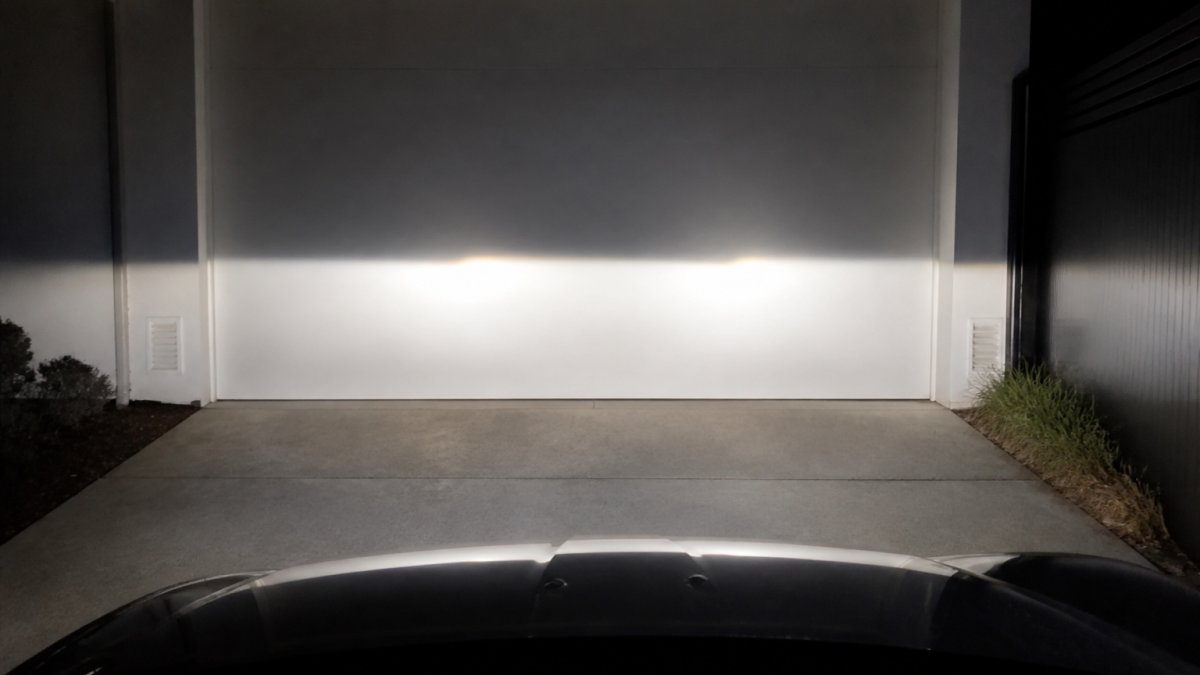
The quickest check: park facing a wall about five metres away and switch on the low beam.
Glare is the giveaway. If oncoming drivers flash their high beams at you, the beam is too high or too scattered, which is both a safety problem and an inspection problem.
HID Bulbs in Projector Headlights: Still Worth Considering in 2026?
HID bulbs in projector headlights still have a place, but a narrower one than a decade ago.
The drawbacks are practical: HID bulbs need a ballast, take a few seconds to reach full brightness, and have a shorter service life than a quality LED.
For most buyers upgrading an older factory halogen setup, a well-matched LED bulb is the simpler and more reliable path.
Legality, ADR Compliance and What Inspectors Check
Road legality in Australia is governed by the Australian Design Rules, which set vehicle lighting requirements, and by state and territory road rules covering how lights may be used and modified.
What inspectors and police look for is straightforward: correct beam pattern, correct colour, no excessive glare, and no warning lights on the dash.
Before buying, check the current requirements with your state or territory transport authority, since rules and inspection criteria can change. For the official national standards, see the Australian Design Rules on the Federal Register of Legislation.
Total Cost of Ownership and What to Ignore in the Marketing
Almost every alternatives guide stops at the purchase price, the least useful number in the decision, because the cost of a headlight upgrade is spread across the bulb, any supporting hardware, the install, the risk of a failed inspection, and how often you have to do it again.
The five cost components that actually matter
- Purchase price per pair. LED retrofit pairs span a wide range depending on brand, chip quality and whether a canbus driver is built in. Cheap pairs often cost less up front and more over time.
- Supporting hardware. Some vehicles need a resistor or canbus module to stop bulb-out warnings or flicker; some LED kits include it, others charge separately. HID always needs a ballast and igniter, a second failure point.
- Installation. Many projector bulbs are a straightforward swap behind the dust cover; others require bumper or housing removal, turning a DIY job into a workshop booking. Check clearance before assuming it's a ten-minute job.
- Inspection and defect risk. A bulb that fails a roadworthy inspection or attracts a defect notice costs you the re-inspection, the replacement bulb and time off the road, a hidden cost that never appears on a product page.
- Replacement frequency. A quality LED should outlast several halogen bulbs; a cheap one may not, and its driver or fan often fails first.
A simple way to compare two options
Rather than comparing sticker prices, compare cost per year of service:
(purchase price + any required hardware + install cost) ÷ expected years of service
A cheaper bulb needing replacement every 18 months plus a resistor can easily cost more per year than a well-matched set that runs clean for five. The same logic applies to HID: the low bulb price is offset by the ballast, warm-up behaviour and shorter capsule life.
Marketing claims worth ignoring
- Headline lumen figures. Frequently measured at the chip, not the road, ignoring losses inside the projector. A high number tells you almost nothing about what you'll see.
- Very high Kelvin ratings. Numbers well above factory colour temperature look blue-white on a wall but reduce usable light in rain and fog.
- "Plug and play" with no fitment list. If the listing doesn't name your make, model and year, treat the claim as unverified.
What to check before you commit
Confirm the base type against your existing bulb, that the housing depth clears any fan or heatsink, whether your vehicle monitors bulb resistance, and that the colour temperature is acceptable for road use where you drive. Those four checks cost nothing and eliminate the most common reasons an upgrade costs more than it should.
Conclusion
Finding a genuine iilumo alternative for projector headlights isn't about chasing the highest output figure, it's about fitment, beam pattern, canbus behaviour and compliance. Get those four right and the upgrade delivers real visibility gains.
At Autoglo Australia, we stock premium LED headlights, projector headlights and taillights across many makes and models, with monthly featured product sales and specialised accessories to match.
Frequently Asked Questions
Can you use LED bulbs in projector headlights?
Yes, LED bulbs are commonly used in projector headlights, and projector-style housings often handle them better than reflector housings because the lens shapes the beam. The catch is bulb positioning. An LED bulb that sits too deep or too shallow in the housing will scatter light and lose the crisp cutoff. Look for a bulb designed for your specific base type (H4, 9003, HB2, H3 or PSX24W) and check that the emitter chips align with where the original filament sat. Fitment and alignment matter more than raw lumen output.
How can I tell whether an LED bulb will fit my projector headlight?
Start with three checks: the bulb base type stamped on your existing bulb or in the owner's manual, the physical clearance behind the dust cover (many LED bulbs have a heatsink or fan that needs room), and whether your vehicle needs a canbus-compatible driver to avoid dashboard error messages. If any of these are unclear, confirm the make, model and year with the seller before ordering. A bulb that fits the socket but not the housing depth will not sit correctly, and the beam pattern will suffer.
Do LED replacement bulbs produce a good beam pattern in projector headlights?
They can, but only when the bulb is correctly positioned. Projector lenses rely on a precise light source location, so a misaligned LED will produce a fuzzy cutoff, dark spots or glare for oncoming drivers. The reliable test is to park facing a wall about 5 metres away after installation and compare the cutoff line to the original bulb. If the line is sharp, level and consistent across both sides, the beam pattern is working. If it is scattered, the bulb needs adjusting or replacing.
Can you put HID bulbs in projector headlights?
HID bulbs can work in projector headlights, and some projector housings were originally designed around them. The trade-offs are warm-up time (HIDs take a few seconds to reach full brightness), a higher install complexity because they need a ballast, and stricter road legality considerations. Many HID retrofit kits sold as plug-and-play are not ADR compliant for on-road use in Australia. If road legality matters to you, check the specific kit against ADR requirements before buying rather than assuming projector compatibility equals approval.